Close

Author Archive

Two winners for 2025 Bread Baker Awards

Thursday, November 20th, 2025

Media Release: 20 November 2025

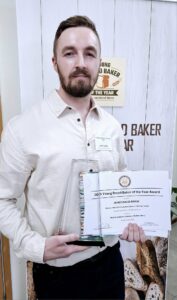
James Berge winner Young Bread Baker of the YearTwo plant bread bakers have taken out the top honours in this year’s competition.

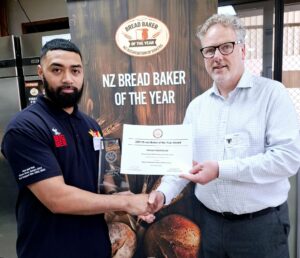
James Berge of Quality Bakers in Napier has been named Young Bread Baker of the Year, while Mavae Finekifolau of George Weston Foods in Auckland has won the Bread Baker of the Year Award. Each will receive a research grant of up to $15,000 from the New Zealand Association of Bakers.

Entrants are required to demonstrate a wide range of skills. Competitors present on a set research topic, complete a 90-minute exam testing their theoretical knowledge of baking technology, and take part in a six-hour practical session in which they bake a selection of bread-based products. This year, contestants were also challenged with a bread-faults recognition test.

James says the competition offered a strong balance of familiar theory and more demanding hands-on work. A plant baker who joined Quality Bakers straight out of high school, he recalls: “I started out packing bread and worked in packing and dispatch for about three years. Two years after moving into the bakehouse, I began my apprenticeship. I’ve now been working in that department for seven years.” James hopes to use his research grant to explore European baking.

Mavae also found the practical component demanding, particularly the need to multi-task under time pressure. He says most of his apprenticeship training has taken place on the bun and roll line, but his seven years at a craft bakery before that provided a solid grounding in hand-moulding and mixing techniques that served him well in the competition.

The competition judges said the overall results were very close, with the competition standard from top to bottom tight this year. Judge Nathan Roberts, a past competitor, says having six strong contestants who all worked well together made for “a high quality, fun competition”.

The competition is open to nearly or newly qualified bread bakery apprentices. There are two classes of entry, an open class with no age limit, and a Young Baker class where candidates must be no older than 30 years of age.
The Bread Baker of the Year Competition is sponsored by the New Zealand Association of Bakers and is designed to promote excellence in people emerging from their training.

ENDS ///
Follow us on Facebook: Bread Baker of the Year

For more information, please contact
Tania Watson – Judging Coordinator
New Zealand Association of Bakers
E: tania@bakingresearch.org.nz
M: 021 1659949

2025 Entrants Bread Baker of the Year Competition

Wednesday, November 19th, 2025

Introducing the entrants in the 2025 Bread Bread Baker of the Year Competition. We wish them all the best for the Competition which runs from 19th to 20th November in Auckland.

Follow all the news from the Bread Baker of the Year Competition on our Facebook page.

Fine Food New Zealand

Sunday, November 2nd, 2025

Discover new products and services, network with exhibitors, connect with decision makers and gain market insights from industry experts at Fine Food New Zealand. Whether you’re an owner-operator or a large organisation, this event will provide you with the tools you need to stay ahead of the competition.

New logo shines light on New Zealand-grown grains

Sunday, October 12th, 2025

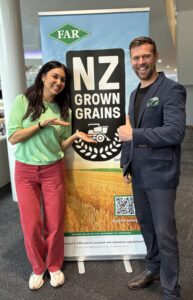
A new logo will now make it easier for consumers to identify and source products made from high-quality New Zealand grown grain.

By launching the “New Zealand Grown Grains” logo, arable growers hope to tap into a strengthening desire by consumers for locally-sourced food as well as reduce reliance on imported product. Most consumers are unaware that when they buy bread from the supermarket it is more likely to be made from imported, rather than domestically-grown milling wheat. This is despite New Zealand arable growers producing some of the world’s best quality grain.

The certification trademark for products made with New Zealand-grown grains is the initiative of growers via their levy organisation, the Foundation for Arable Research (FAR). FAR general manager of business operations Ivan Lawrie says the certification trademark will start appearing on packaging and advertising, with interest already shown by bakers as well as makers of breakfast cereal and plant-based milk. The trademark not only applies to milling wheat, but also other grains such as oats barley and maize, as well as seeds.

Launching the logo in Auckland as part of the Eat NZ Hui, Lawrie noted that while Auckland is the country’s most populated region, it received the least amount New Zealand-grown grains. Instead most bread purchased in the North Island uses grain imported from Australia. This is because it is cheaper for North Island flourmills to import grain from Australia than freight it from Canterbury, where it is predominantly grown.
At least three-quarters of the bread sold in New Zealand is made from imported grain, with 250,000 to 300,000 tonnes of milling wheat imported each year.

As wheat only represents about 40 cents of the cost in a standard loaf of bread, greater use of domestically-grown grain is expected to have a marginal impact on consumer prices, Ivan Lawrie says.
“To be sustainable for growers, the price of wheat needs to rise by 10-15 per cent. This is just on the value of the wheat component, not the whole cost of producing a loaf. There are categories of bread that can easily carry this.
“There is space in the market for every type of loaf, from $1 white bread to a $7 sour dough.”

Products using the Grain Mark can include up to 20 per cent of imported or blended ingredients, to allow for ingredients such as yeast which may not be available domestically.
Grain Mark Ambassador, celebrity TV chef Nadia Lim told the launch that it will “open up the conversation” and lift consumers’ awareness. Nadia Lim and her husband Carlos Bagrie own Royalburn Station near Queenstown, which despite its high altitude has a history of growing quality grain since the 1800s.

While creating several added-value ventures, including supplying the malting barley for Swifty beer in a joint venture with brewers Garage Product, most of their cereal production is for livestock feed. “The reality of our business is that we are still significantly tied to dairy farming. Only 10-15 per cent of our cropping volumes are for human consumption and we would like to increase this,” Nadia Lim says. Carlos Bagrie says that if returns lifted by 10-15 per cent this would make a difference to growers’ bottom line. “If we turn the engine off on arable farming it will be very hard to restart it again.”

While dairy and sheep and beef sectors are enjoying record prices, arable farmers are struggling to achieve profitable returns and hope the logo can revitalise their sector and expand production.

Mid Canterbury mixed arable farmer Brian Leadley says it is disappointing to be competing with imported milling wheat, but also challenging. “We are proud of the milling wheat we produce and want to see more of it used.”
His 450 hectare farm near Ashburton grows 13 different types of crops in any year, as well as farming livestock. About a quarter of his cropping area is in cereals, mainly milling wheat, but he also grows clover and ryegrass seed for pasture, as well as specialised seeds including evening primrose and red beet.

Phil Jackson, group general manager of Farmers Mill in Timaru, which has just been purchased by flourmill company Mauri, says it only processes South Island-grown wheat. “The biggest challenge is freight and getting product from the South Island to the North Island.

“The Grain Mark is significant as it is an opportunity for us to get people to be aware of what we do in New Zealand.”
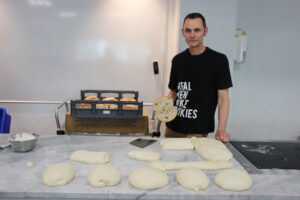
Managing director of large-scale catering group Compass, Paul Harvey, told the launch that a growing desire to source product from within New Zealand meant it is now including this in its tender documents.

As Compass produces 170,000 meals a day for schools, hospitals, the defence force and businesses, quality and consistency of ingredients is key. It sources $20 to $25 million of grain-based product a year.

“The quality of grains in the South Island is phenomenal and if we can tell that story, I am in no doubt the volumes and benefits will come.

“Regulatory change isn’t going to happen so we need to take on this ourselves,” Paul Harvey says.

Andrew Fearnside, owner of Wild Wheat, an Auckland bakery producing artisan, specialty breads, says he is proud to be one of the first to sign up and use the New Zealand-Grown Grains logo. He sources 12 tonne of New Zealand-grown wheat a week for his six stores as well as other businesses, including supplying My Food Bag.

“The provenance of our flour is a good story and we are a shop window for the growers,” he says.

Read the NZ Grown Grains Q&A Information

Delmari Janse van Rensburg wins 2025 LA Judge Award

Tuesday, May 20th, 2025

Media Release 16th May – Source AEGIC

NZ baker Delmari Janse van Rensburg. Photo: AEGIC

Delmari Janse van Rensburg of New Zealand has been named the 2025 LA Judge Award baking apprentice of the year after three days of spirited competition.

The winner was revealed at the LA Judge Award Gala Dinner in Sydney on Thursday 15 May 2025, hosted by the Australian Export Grains Innovation Centre (AEGIC) and Woolworths.

The LA Judge Award has tested young bakers across Australia and New Zealand since 1967, and this year’s competitors once again combined a challenging gauntlet of practical baking, theory and presentation skills.

Thanks to major sponsor and prize sponsor Puratos, Delmari will soon jet off to Belgium for an intensive week of training in Brussels, including visits to their Innovation Center, Sourdough Institute, the world-famous Sourdough Library and Maison de Levain, as well as tours of Brussels’ best bakeries/patisseries and the Chocolate Story museum. All accommodation, food and transport is included.

Second place was Jacob Maddock of New South Wales, who receives $1,500 in cash as well as two days of training with Puratos in Sydney, including accommodation, food and transport.

LA Judge Competitors. Photo: AEGIC

The other four competitors will also receive this training thanks to Puratos.

The LA Judge Award is hosted by AEGIC at its Sydney Pilot Bakery.

Retiring LA Judge Award Director Dr Ken Quail applauded every competitor for the commitment and creativity they brought to the bakery floor.

“The way they tackle this demanding competition and still support one another is inspiring,” Dr Quail said.

“Each finalist leaves with sharper skills, improved confidence and industry connections that will help them as they move forward in their careers. They should all be proud.”

Competition organiser and AEGIC baking scientist Sabrina Lim said the LA Judge Award was a rare chance for young bakers to be exposed to new skills, knowledge and ingredients.

“It’s a wonderful opportunity for the competitors to be mentored by highly experienced industry judges,” she said.

“The knowledge transfer between the judges and competitors and vice versa as they work closely over the three days is invaluable.”

The 2025 judges were Michael Prowse of Allied Pinnacle, Cary Burnett from the William Angliss Institute, and Lindsay Weber of Homestyle and Gold Coast Bakeries. Lindsay is also a former LA Judge Award winner.

The 2025 event was a special one as the industry farewelled long-time LA Judge Award Director Dr Ken Quail, who has retired after dedicating 34 years to AEGIC’s Sydney operations (formerly BRI Australia).

Since its inception, the LA Judge Award has helped emerging bakers sharpen their craft while strengthening links between the baking and grain industries.

Recovering valuable resources to create sustainable biogas and biofertilizer

Saturday, March 29th, 2025

Presented as part of Technology Transfer Seminars 2025

Stuart Walker, Ecogas, Director

Stuart Walker has a diverse career background and can claim to have literally worked at all ends of the agricultural/food industry from pasture to plate. After 15 years in the animal health/nutrition and veterinary sectors, Stuart went onto run the Hansell’s Food Group from 1999-2006. This was followed by successful ownership of two niche food manufacturing companies whilst also taking on the Acting CEO role in 2011 during the establishment phase for ‘The Food Bowl’ as part of a $20m investment by local and central government in promoting new food technologies to the industry. Stuart continues to consult to numerous food and non-food business over the last 20 years including a very close association with Ecostock Supplies and as a Director of Ecogas, New Zealand’s first large scale waste to energy plant based at Reporoa. Stuart also has an interest in the baking field as an owner of a dedicated factory in Auckland producing around 5 ton of specialist breadcrumbs per day.

Extracting value from waste

How do we extract value out of waste? Not just commercial food waste, but also household waste. This is the question Ecogas aims to answer by supporting the development of a sustainable circular organic waste to energy solutions (sustainable biogas and biofertilizer) by utilising Anaerobic Digestion technology.

Ecogas is a 100% New Zealand owned joint venture between Ecostock (commercial waste food for dairy and pigs) and Pioneer Energy. Stuart describes Ecogas as a commercial operation for public good.

Their Anaerobic Digestion (AD) Facility is on 2 Ha of farmland adjacent to Turners &Grower’s 5Ha tomato growing glasshouse. The AD Plant can process up to 75,000 t per annum of organic food wastes. Renewable biogas is used to power a 1.2 MWeCHP, onsite utilisation of heat, and surplus electricity is exported. Excess biogas will be separated into methane for injection into natural gas grid and CO2 for glasshouse fertilisation. Soil conditioning bio-fertiliser is now being spread onto more than 1,500 Ha of neighbouring farmland.

Organic waste is sourced from farms, households, factories, and food services, transported to digesters, and turned into biogas which is used on site for energy, growing tomatoes in glasshouses as part of their circular business model. Very little process energy is required, only for mixing and contact. Methane is captured as a key energy source. Nitrogen and key nutrients are retained in the liquid digestate.

Ecogas is in the process of developing another facility on the outskirts of Christchurch.


Field to Flour: Can we reduce our footprint?

Saturday, March 29th, 2025

Presented as part of Technology Transfer Seminars 2025

Jo Drummond, Foundation for Arable Research, Senior Researcher

Jo Drummond is a Senior Researcher with the Foundation for Arable Research (FAR), where she runs the cereal research programme. A graduate of Lincoln University, she has worked in the arable sector for 20 years and has experience of both NZ and UK systems. Jo works with growers to support development of sustainable cereal programmes. Her areas of interest are agronomy, applied pathology and entomology, pesticide resistance management and agroecology.

Taking sunlight and running it into money – a lighter touch

Jo works with cereal growers, operating at the start of the process that leads to a loaf of bread. She took us back to the basics, explaining the growing process, the influencing factors, and their impact on flour supply and baking. She emphasized how systems are having to evolve as consumer demands change.

Jo outlined the challenges of growing wheat, highlighting the roles of variety, management, and weather. She described the sun as the fuel, the crop as the engine, management as the driver, and the environment as the wild card, noting that we can control very few of these factors. Weather can ruin even the best plans, producing unusable wheat. And climate change, with its flooding and droughts, is now exacerbating these issues.

Quality is another challenge. Milling wheat growers are paid based on yield and quality and receive a price premium over feed wheat. Despite this premium, the majority of the wheat grown in New Zealand is grown for animal feed. Growing enough high-quality milling wheat is both an art and a science. Protein, water absorption, dough elasticity, gas retention, gluten webbing, volume, colour, crumb, and shelf life are all influenced by the variety, management and environment under which the milling wheat was grown.

Management, particularly nitrogen use, is crucial. Nitrogen is the biggest input cost, requiring a careful balance between supply and demand. Growers must consider how much nitrogen to apply, when, and where, while also recording and reporting it. Up to 50% of applied nitrogen can be lost through leaching, emissions, runoff, erosion, and immobilization. Jo emphasized the long-lasting impact of nitrous oxide from nitrogen fertilizer, which persists much longer than methane from livestock.

Overusing nitrogen is wasteful both to the environment and financially, so finding the economic optimum rather than targeting the total biological option is a useful risk mitigation strategy. FAR’s research has identified this sweet spot, allowing farmers to reduce nitrogen use, maintain quality, remain profitable, and reduce greenhouse gas emissions.

Agrichemicals are another hot topic. They protect yields by managing diseases, pests, lodging, and weeds. However, farmers face a shrinking arsenal as pesticides are removed from the market, pesticide resistance grows, and consumer awareness of food residues increases. Pursuing yield at the expense of the environment is no longer viable. But removing all agrichemicals could result in at least a 30% loss of production, so building resilience is crucial. Crop protection practices, including precision agriculture, plant breeding, and biocontrol, will play key roles. Plant protection products will still be used, but they can’t be the sole defence. Layering strategies is becoming the norm to enhance systems and start the journey toward sustainability. This is challenging for farmers but will become expected.

Jo’s take home message is that we can reduce our environmental and economic footprint while still producing high-quality products, but growers must operate within limits and will have to make do with less as climate change, weather extremes and reduced access to agrichemicals test their resilience.


Leading Action on Food Waste

Saturday, March 29th, 2025

Presented as part of Technology Transfer Seminars 2025

Jess Broun, Kai Commitment

Jess Broun is the Programme and Account Manager for Kai Commitment, a voluntary agreement for leading food businesses to reduce their food waste led by New Zealand Food Waste Champions. Jess has an extensive Partner and Operation management background with many years spent in the food sector. She works to empower businesses to see the opportunity in their surplus and take a leadership role in reducing their food waste.

Everybody’s Responsibility, Every Business’s Opportunity

“When you look at the food it was meant to be, not the waste it became, you realize the true cost.” There are opportunities to not only reduce food waste, says Jess, but to innovate, create value and empower people. If you know why you are wasting food, you can change it.

Food waste contributes to global climate change, the cost of living, and food insecurity crises. It has economic, social, and environmental impacts. In New Zealand, 45% of land is used to grow food or farm animals, equivalent to the entire North Island. A third of this food goes to waste. Waste occurs across the supply chain, including the energy, water, manufacturing, and resources used to produce food. 80% of New Zealand’s exports go to countries with mandatory climate-related disclosures. Reducing food waste and diverting food waste from landfills would significantly help New Zealand achieve its methane reduction target.

So, where do we start? Business/ industry can drive significant change across the food system chain, but better collaboration is needed to reduce food waste faster. Jess notes that while a lot of good work is being done, collective efforts are essential for greater impact.

Voluntary food waste agreements are emerging globally. “Kai Commitment,” New Zealand’s food pact launched in 2022, focuses on identifying waste, understanding its drivers, and taking action. The program encourages businesses to set targets, measure food waste, plan and act to reduce it, and collaborate to innovate and share best practices.

Every business should ask itself the cost of unsold or wasted food. Viewing it as surplus rather than waste can help see it as an asset that can be reused and create value. Considering waste at the product design stage can prevent it occurring.

Managing food waste according to a food recovery hierarchy helps businesses reduce their emissions and disposal costs and ensures their surplus goes to the best destination possible.  The preferred outcome is preventing food waste or redistributing it commercially. This is closely followed by donating to people in need or to stock feed. Next, businesses should seek waste destinations that enable nutrient or energy recovery; the least preferred outcome is food waste ending up in landfills.

A collaborative project involving several large commercial bakeries identified food waste destinations and drivers across the bread supply chain. The resulting map highlights the need for coordination and collaboration between supply chain stages to address systemic food waste drivers. It also captures end destinations for food waste and barriers and enablers for each.

The Working Group is consolidating findings and deciding how best to disseminate the resource and project outcomes. Businesses involved are working together on root cause analysis and piloting projects to reduce food waste. Detailed findings and analysis from this project will be published shortly and will be accessible on KaiCommitment.org.nz

In recognition of Food Waste Action Week, Kai Commitment has launched a free resource, The Food Waste Rapid Review tool. The tool offers actionable steps to:

  • Identify areas where food waste occurs within your operations.
  • Implement strategies to reduce waste effectively.
  • Measure progress to ensure continuous improvement.

The tool is designed to help businesses achieve significant benefits, including cost savings, enhanced operational efficiency, and strengthened sustainability practices.

Reducing food waste is also a great way to contribute to a more efficient, resilient, and sustainable food system that benefits everyone.  Regardless of where you are in the supply chain, we can all do something, but we achieve the best results by working together.


Bread bags from bread returns

Saturday, March 29th, 2025

Presented as part of Technology Transfer Seminars 2025

Dr Gert-Jan Moggré, Senior scientist, food chemistry and functionality at the institute of Plant & Food Research limited.

Solving two problems at once

Gert-Jan reported on the progress being made in the “Bread bags from Bread Returns” project which has now completed stage 2.

The project aims to address two major sustainability issues: returned bread, and single use plastic bags by asking what if we combined these two things? Can we make packaging out of bread returns using recovered starch turned into bread bag material that are compostable?  The first step is to create starch thermoplastic. This behaves like a plastic and can be transparent but is fairly brittle and can attract water so it is blended with a second polymer to get the mechanical properties they need.

Stage 2 of the project is extruding and blending: ThermoPlastic Starch (TPS) by extrusion, blending with co-polymer, techno-economic modelling.

The team had to design an extraction process that is profitable and easy to do. They tried several processes. While there is higher starch recovery from white bread than mixed bread, they want to be able to use all bread returns. They have now confirmed they can make TPS using bread returns starch mixed with a polymer, with a range of tensile strength similar to commercial TPS based packaging materials.

A technoeconomic analysis came next, to consider if the concept makes financial sense. They needed to estimate the relative economic viability of the different processing options. Based on producing 220 million bread bags (the full requirement in New Zealand) they found that there are enough bread returns and that bags could be made at scale cost effectively based on their estimates, although on price alone they can’t compete with low density polyethylene bags. Consumer preference or legislation may require change to the use of these in future.  The technoeconomic analysis for preparing TPS from returned bread found a net positive return in comparison to using commercial starch-based polymers made of virgin starch material.

Next steps are bread TPS production for bread bag applications including pilot-scale starch extraction, blow-forming bags with bread TPS/PBAT blends and testing functionalities key to the baking industry.

Further investigation is needed of the techno-economic analysis to settle on an optimum system and to increase the quality of the analysis assessment, involving unit operations user requirement specifications and quotations, variability testing, and setting feedstock and product specifications.

Baking Global Technology Scan

Saturday, March 29th, 2025

Presented as part of Technology Transfer Seminars 2025

Syahmeer How, Plant & Food Research Limited, Research Scientist

Syahmeer How (B.E, PhD Chemical & Bioprocess Engineering, Massey University) is a Bioprocess Engineer at Plant & Food Research Limited in Palmerston North. He specialises in technoeconomic analysis, process optimisation, and decarbonisation strategies for the food industry. Syahmeer plays a key role in developing the Baking Global Technology Scan, applying his expertise in chemical engineering to inform strategic decision-making. Outside of work, he is a passionate squash player and a dedicated foodie.

How can commercial bakeries be more energy efficient and lower their carbon emissions?

EECA (Energy Efficiency and Conservation Authority) aims to mobilise New Zealanders to be world leaders in clean and clever energy use. EECA’s sector decarbonisation programme provides tailored tools and resources to help commercial bakeries be more energy efficient and lower their carbon emissions.

Baking decarbonisation technologies are prominent in Europe and the US. EECA engaged Plant & Food Research Limited to undertake this technology scan looking at emerging technologies and innovation within the baking sector both locally and globally and defining how these could be applied within the New Zealand context.

An energy breakdown showed that baking is the processing step with the largest potential for greenhouse gas (GHG) emission reduction. Scanning the baking process gave an understanding of the energy consumption at each stage of the processes, to see what is most energy intensive for different bakery products. Gas-fired ovens are the main emitter of greenhouse gasses in New Zealand bakeries, and energy loss is a large part of the consumption.

Each technology option was given a rank score from 2–50 based on energy savings/greenhouse gas (GHG) emissions against relative cost of investment. These scores were used to rate and compare the technology options. The technologies were also evaluated for future potential, with ratings projected for 2030 to provide a dynamic outlook. The year 2030 was chosen as a reference point, aligning with New Zealand’s target to reduce greenhouse gas (GHG) emissions by 50% from 2005 levels.

The top technologies and practices recommended from the findings of this report include:

Process Technology

High Temperature Heat Pumps to recover and reuse low temperature heat: A robust decarbonisation solution by utilising waste heat from the production process.

Heat Recovery from Exhaust Gas: This technology provides higher greenhouse gas (GHG) savings compared to insulation upgrades, while remaining low-cost with a high Technology Readiness Level (TRL).

Heat Recovery

Dual Fuel Burners: This flexible option utilises natural gas now, with the capability to switch to electricity in the future.

Hydrogen Burners for Ovens: Future potential exists as infrastructure develops. Currently associated with high operational costs due to limited hydrogen production.

Fuel Switching

Oven Insulation Upgrades: An affordable and easy to implement solution but with minimal impact on greenhouse gas (GHG) emissions.

Exhaust fans with variable dampers: By optimising exhaust systems with variable dampers and adjusting fan drives, bakeries can reduce energy consumption and improve oven efficiency.

Process Scanning & Optimisation: A low-cost, high Technology Readiness Level (TRL) option, although it offers limited greenhouse gas (GHG) emission savings.